


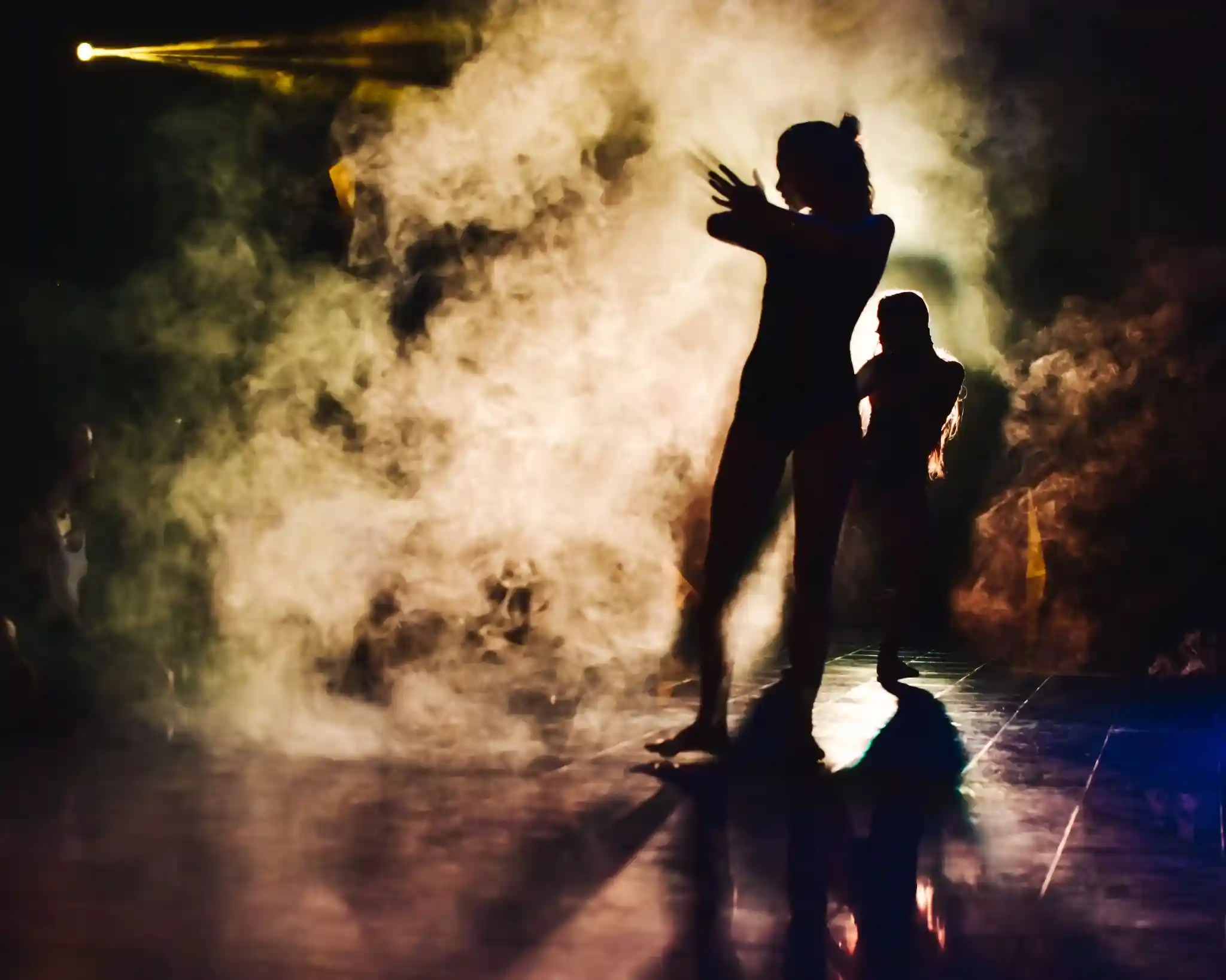
Live Performance Art is one of the most compelling forms of contemporary expression. It is immediate. It is human. It unfolds in real time, breathing in the same space as its audience. Unlike paintings or digital images, it cannot be paused or replayed in its original form. It lives in the moment and disappears just as quickly. That fragile existence is not a weakness. It is its greatest strength. Live Performance Art challenges how we define creativity. It rejects the idea that art must be an object. Instead, it becomes an experience. The artist’s body, voice, movement, and vulnerability form the medium. The audience is not just watching. They are witnessing. Sometimes they are participating. Always they are affected. In a world saturated with screens and constant distractions, live performance creates rare moments of shared presence. It demands attention. It invites reflection. It often leaves an emotional imprint that lingers long after the space has emptied.
Historical Foundations of Live Performance Art
Live Performance Art did not appear suddenly. It evolved through decades of experimentation and rebellion. In the early twentieth century, artists began to question traditional forms. They were dissatisfied with static canvases and silent galleries. They wanted movement. They wanted disruption. They wanted art to feel alive and urgent. This desire gave birth to radical artistic gestures that would later shape the foundation of Live Performance Art.
Early Experimental Roots
Movements such as Futurism and Dadaism embraced provocation and action. Futurists celebrated speed, technology, and industrial energy. They organized public demonstrations that blurred poetry, politics, and performance. Dada artists, responding to the chaos of war, used absurdity and unpredictability to shock audiences. Their events were chaotic and confrontational. These early experiments shifted attention from finished artworks to artistic actions. The emphasis moved toward gesture, voice, and embodied presence. Art was no longer confined to the canvas. It was something that happened.
The Emergence of Happenings and Fluxus
By the 1960s, Live Performance Art took a more defined shape. Artists associated with Happenings and the Fluxus movement pushed boundaries further. They erased the line between artist and audience. They introduced participation. They invited spontaneity. A performance could occur in a gallery, a warehouse, or on a city street. The structure was often loose. The outcome uncertain. This unpredictability became central to Live Performance Art. The event was not rehearsed in the traditional theatrical sense. It unfolded through interaction and chance. This period established performance as a serious contemporary medium, capable of intellectual depth and social commentary.
Defining Characteristics of Live Performance Art
Live Performance Art stands apart because of its structure and intention. It is not theater, though it may use theatrical tools. It is not dance, though movement can be central. It is not a concert, though sound may be involved. Its uniqueness lies in how it combines elements while remaining rooted in conceptual exploration.
Ephemerality and Time-Based Experience
Time is the material of Live Performance Art. The work exists only as long as the action continues. Once finished, it cannot be recreated exactly. This ephemerality creates intensity. The audience understands that what they are witnessing will never happen in the same way again. That awareness sharpens perception. It deepens emotional engagement. Unlike recorded media, there is no rewind button. The experience demands presence. Experts in performance studies often emphasize that this time-based quality transforms spectators into witnesses. The fleeting nature of the event heightens its significance. Memory becomes part of the artwork.
Audience Participation and Interaction
Another defining element of Live Performance Art is the active role of the audience. In many works, viewers are invited to move, speak, respond, or even alter the direction of the performance. The boundary between performer and observer becomes porous. This interaction creates shared authorship. The artwork evolves through exchange. It can be intimate or confrontational. It can be subtle or dramatic. The key is that the audience is not passive. They are implicated in the experience. This participatory dynamic reflects contemporary cultural values of dialogue and collaboration. It also introduces risk. No two performances are ever identical because no two audiences are the same.
Concept and Intention Over Object
Live Performance Art prioritizes ideas over objects. The physical remnants of a performance may include photographs or recordings, but these are documentation, not the work itself. The core lies in intention. What is being questioned. What is being revealed. What is being challenged. Artists often use minimal materials because the concept carries the weight. This conceptual focus distinguishes Live Performance Art from entertainment. It is not about spectacle alone. It is about inquiry. It may address identity, politics, gender, memory, or power structures. The performance becomes a living argument, embodied rather than written.
Iconic Figures in Live Performance Art
Certain artists have profoundly shaped Live Performance Art and expanded its possibilities. Their works demonstrate the emotional and intellectual depth that the medium can achieve.
Marina Abramović and Endurance Art
Marina Abramović is widely recognized as a pioneer of endurance-based performance. Her works often test physical and psychological limits. She has sat in silence for hours. She has placed herself in vulnerable positions before audiences. Through these actions, she explores trust, pain, connection, and presence. In one of her most well-known works, she sat silently across from museum visitors, inviting them to meet her gaze. The simplicity was powerful. The emotional exchange was intense. Abramović’s work reveals how Live Performance Art can create profound human connection through stillness and endurance. The body becomes both medium and message.
Yoko Ono and Interactive Performance
Yoko Ono’s performances demonstrate the conceptual and participatory strength of Live Performance Art. In works where audience members were invited to cut pieces of her clothing, she examined vulnerability, power, and social behavior. The act was simple. The implications were complex. Ono showed that Live Performance Art could be political without being didactic. It could be quiet yet deeply disruptive. Her approach emphasized trust and confrontation, illustrating how interaction itself can become the artistic material.
Contemporary Innovations in Live Performance
Today, Live Performance Art continues to evolve. It adapts to new technologies and cultural contexts. It responds to global conversations and digital realities. Yet it retains its core: presence and experience.
Integrating Digital Platforms and Virtual Reality
Modern artists use streaming platforms, virtual reality, and augmented reality to expand Live Performance Art beyond physical spaces. A performance can now be experienced simultaneously by audiences across continents. Digital interaction introduces new forms of participation. Viewers can respond in real time. They can influence outcomes. While some critics argue that digital mediation reduces immediacy, many artists use technology to amplify engagement rather than replace presence. Hybrid performances blend physical and virtual elements, creating layered experiences that reflect contemporary life.
Immersive and Multi-Sensory Experiences
Immersive performance has become a significant trend. Audiences move through spaces. They encounter performers at close range. They may influence narrative direction or explore environments freely. These experiences engage multiple senses. Sound, light, texture, and proximity combine to create emotional depth. Live Performance Art in immersive form dissolves the traditional stage. It transforms entire buildings or outdoor spaces into environments of exploration. The audience becomes part of the architecture of meaning.
Appreciating and Experiencing Live Performance Art
Engaging with Live Performance Art requires openness. It may not provide clear answers. It may challenge comfort zones. But this challenge is intentional.
Cultivating Awareness and Open-Mindedness
Approach a performance without rigid expectations. Allow space for ambiguity. Notice your emotional reactions. Pay attention to the environment and to other audience members. Live Performance Art is relational. Your presence influences the atmosphere. Being aware of that dynamic deepens the experience.
Contextual and Conceptual Reflection
After the performance, reflection is essential. Consider the cultural and political context. Think about the artist’s intention. Ask what questions were raised rather than what conclusions were offered. Experts often recommend reading artist statements or critical essays to gain further insight. Context enriches understanding and reveals layers that may not be immediately visible.
Expert Advice for Studying and Curating Live Performance
For students, scholars, and curators, studying Live Performance Art requires a combination of observation, documentation, and theoretical research. Attend live events whenever possible. Take detailed notes. Observe audience reactions as carefully as the performer’s actions. Documentation should include video, photography, and written reflections, but it must be approached ethically and in collaboration with the artist. Curators should engage directly with performers to understand intention and boundaries. Archiving performance demands sensitivity because the documentation is not the artwork itself. It is a trace. Scholars benefit from interdisciplinary study, drawing from art history, theater studies, philosophy, and sociology. Live Performance Art intersects with many fields, and deep understanding emerges from this cross-disciplinary approach.
Conclusion
Live Performance Art remains vital because it insists on presence in a distracted age. It resists commodification. It resists permanence. It asks audiences to slow down and witness. Its power lies in shared vulnerability. In the subtle exchange of gaze. In the tension of silence. In the unpredictability of participation. It transforms ordinary rooms into charged spaces of possibility. It challenges norms not through argument alone but through embodied experience. In doing so, it creates moments of clarity and discomfort that linger in memory. Live Performance Art is not simply a contemporary medium. It is a reminder that art can be alive, relational, and profoundly human.

